The short version
New sending inboxes need a few weeks of warm-up before real sends begin. After that, most replies arrive within hours of each email, and booked calls build over the following weeks. Closed deals then follow your normal sales cycle, so judge a pilot stage by stage.
Cold email takes a few weeks of inbox warm-up before real sends begin, and then three clocks run at different speeds. Replies come within hours of each email once sending starts. Booked calls follow over the next weeks as replies get handled. Closed deals arrive on your normal sales cycle, which no email can shorten. Judge each clock on its own, instead of judging the whole channel on closed deals in the first month.
Why the first weeks look quiet
A new cold email setup sends nothing to prospects in its first weeks. Send from new domains and inboxes kept apart from your main domain. A new inbox has no sending history, so its volume has to rise slowly. One outbound timeline guide puts this warm-up at 14 to 21 days before inboxes can send at full capacity. Longrun's pilot plan sends no emails for its first three weeks. It warns that about 200 cold emails from a new mailbox on day two gets it flagged.
Use those weeks for the work that decides results later. Build the list of buyers who fit, write the first emails and decide what a good reply looks like for your offer. If you skip the warm-up to save time, you risk the inboxes before the campaign has a chance to show anything. So a quiet first month is normal, and it is not a sign the channel failed.

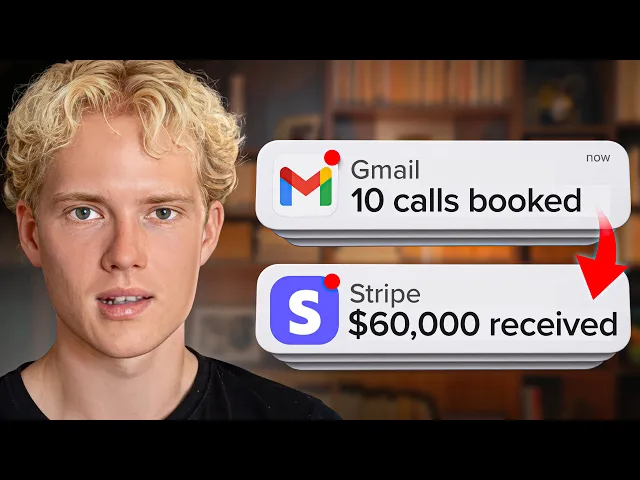
Prefer to watch? I talk about this on my YouTube channel.
When the first replies arrive
Once real sending starts, replies come fast. Smartlead's reply timing data, drawn from more than 850 million emails on its platform, shows 64% of replies arriving within 1 hour of the email. By 24 hours the figure is 88.5%, and by 72 hours it is 93.9%. The same page recommends waiting about 3 days before a follow-up. You do not need to wait weeks to learn whether a single email lands.
Our own data shows how quickly one email can move. In one campaign we sent 34,000 emails to completely cold scraped leads, with no CRM and no intent data. It produced 395 leads in 7 days, or one positive reply for every 86 sends. That is a single campaign, not a benchmark for your market or your offer. It shows that a campaign can produce replies within days of the first send.
If the first week of sending brings no replies at all, look at the setup before you judge the channel. Check that the emails land in the inbox, that the list fits the buyer and that the offer is clear. Those three decide whether the reply clock starts.
When replies turn into calls and deals
A reply is not a booked call, and a booked call is not a deal. Interested replies need a fast answer and a time on your calendar, so calls build up over the weeks after sending starts. The deal clock then runs at the speed of your own sales process. If your buyers take a month to sign after a first call, cold email will not change that. It changes how many first calls you have.

Some markets stretch the last clock a long way. One buyer we spoke with sold into a conservative industry where sales cycles were very slow, with long trials and third parties involved. In a market like that, judge the pilot on replies and booked calls, because closed deals may land after the pilot ends. Set that expectation with your team before the first email goes out.
Season matters too, but you can plan for it. Another buyer asked whether booked calls would drop in their off season. They also asked if a quiet period was the right time to launch, so the pipeline was full before peak demand. Working back from your busy months is sound reasoning, because the setup weeks and the sales cycle both sit between launch and revenue.
How to set up a pilot you can judge
A pilot needs measurable success criteria agreed before it starts. One buyer we spoke with asked for a modest, short pilot with measurable criteria over a few months. They wanted to validate the offer before committing to a larger campaign. That is a fair ask. Write down what you will measure at each stage and when you will measure it.
Split the pilot along the four stages pictured above. During set up, the measure is whether the inboxes warm up and the list is built. During first sends, it is inbox placement and replies per email sent. During booked calls, it is how many interested replies become calls. During deals, it is how those calls close on your normal cycle. Judging the whole pilot on closed revenue in month one mixes up all four clocks.
Test more than one angle while you have the time. One approach raised on a sales call is to test several different outcome promises in your emails. After a few weeks of results, you focus on whichever one resonates. A pilot that tests one offer only tells you about that offer. Our guide on how to test cold email offers covers how to run those tests.
What to do when results trail the forecast
Suppose you were told that a few months of outreach would bring a steady stream of replies and booked meetings, and your results fall far below that. You may start to wonder whether cold email is right for your offering at all. If you are in that position, go back through the clocks in order. Check whether the inboxes finished warming up, whether emails land in the inbox and whether the list fits your buyer.
Then look at replies per email sent and how fast interested replies get an answer. A forecast with no stage-by-stage measures gives you nothing to check against, so ask for those numbers before you agree to the next month. Our guide to a good cold email reply rate uses the same 34,000-email campaign and calls it a single campaign, not a benchmark.
How we run it for you
We have run 2,918 cold email campaigns. We set everything up, run the cold email and book the calls into your calendar, so you don't touch a single thing. All you have to do is show up and close the deals. Clients close 40% to 60% of the calls we book, because every lead is financially qualified and ready to buy. If you want to see what your own timeline could look like, book a call with us.
Cold Email
Outbound
Lead Gen

Want warm leads booked for you?
We find the leads, write the emails and book the calls, all on a revenue share model. You show up and close.
Book your strategy callKeep reading


Averages 11% Reply Rate